Document - Structural Plans – Turning design ideas into buildable reality
What are Structural Plans and Why Do I Need Them for Construction?
You have your architectural plans, and you love the design. But if you handed those drawings directly to a builder, they would have a lot of questions: "How thick is the concrete slab?", "What size steel beam goes over this door?", "Where do the columns go?"
This is where Structural Plans come in. While the architect designs the vision and function of the home, the structural engineer designs the skeleton that holds it up.
Here is a guide to understanding structural drawings and why they are vital for getting your Construction Certificate.
What are Structural Plans?
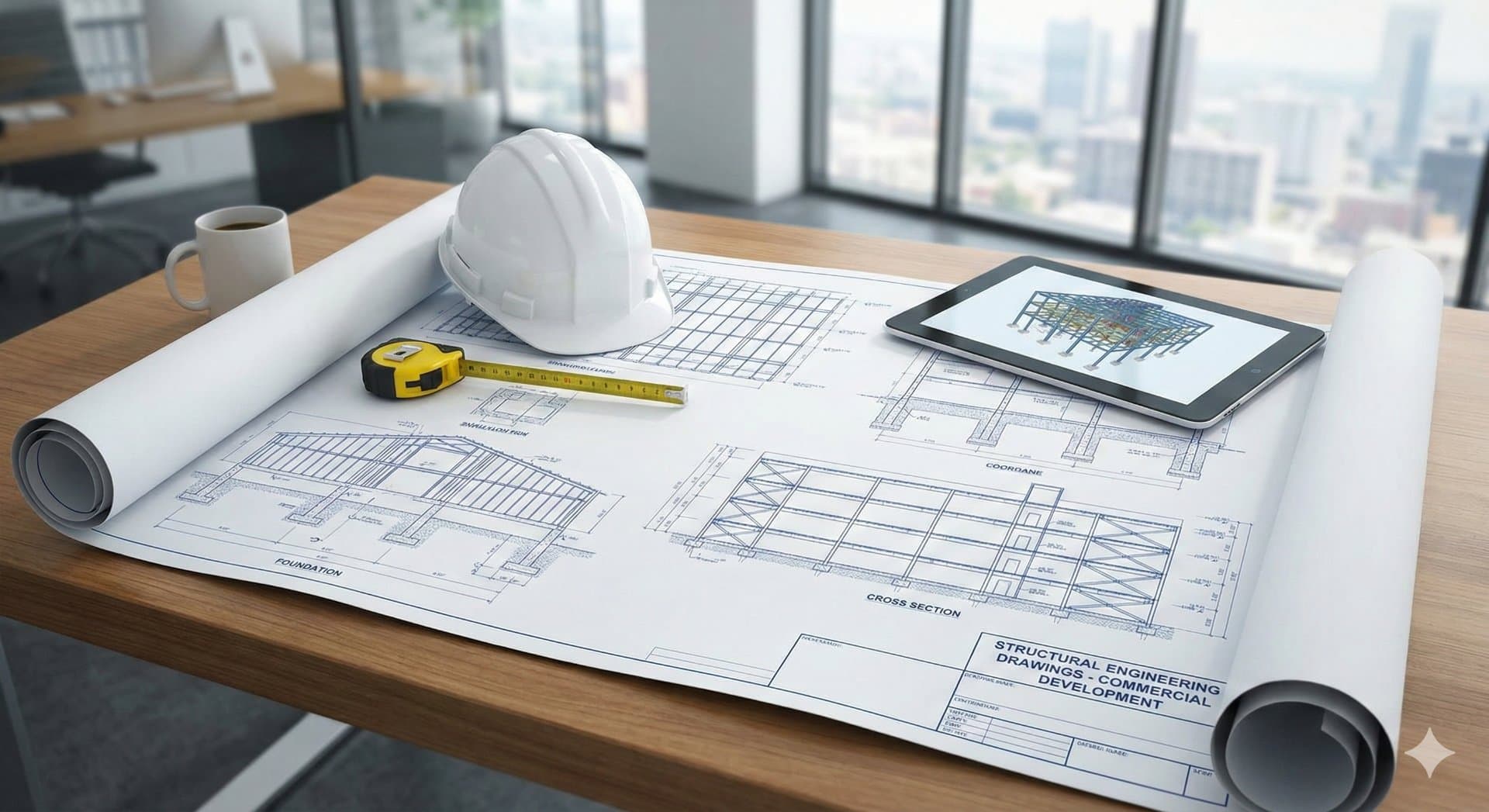
Structural Plans are a set of technical drawings prepared by a qualified Structural Engineer. They look similar to architectural floor plans but strip away the furniture and finishes to focus entirely on load-bearing elements. They specify exactly what materials are needed to support the weight of the house, wind loads, and soil pressure.
Why do you need them for a CC or CDC?
While your Development Application (DA) focuses on how the building looks and impacts neighbours, the Construction Certificate (CC) or Complying Development Certificate (CDC) focuses on safety.
- Mandatory Compliance: The Private Certifier cannot issue an approval to build without engineering drawings that demonstrate compliance with the National Construction Code (NCC).
- Builder’s Quote: A builder cannot give you a fixed-price contract without structural plans. Steel and concrete are two of the most expensive materials in a build; without a specific engineering design, the builder is just guessing the cost.
- Liability: If a wall cracks or a roof sags in the future, the structural plans serve as the legal record that the building was designed correctly.
What information is included in Structural Plans?
A standard residential set typically includes:
- Footing & Slab Plan: Shows the concrete foundation, including the depth of trenches and the specific mesh reinforcement required (based on your Geotechnical Report).
- Framing Plans: Layouts for the floor and roof structure, specifying timber sizes or concrete thicknesses.
- Steel Beam Layouts: The location and size of any structural steel beams (e.g., "250UB37") needed to span large openings like bi-fold doors.
- Bracing Plan: Where plywood or steel bracing must go to stop the house racking (wobbling) in high winds.
- Details: Zoomed-in drawings showing how connections work (e.g., how a steel post connects to the concrete footing).
When are they required?
Structural plans are usually prepared after DA approval (or alongside the architectural plans if doing a CDC). Once the Council approves the design, we send the final architectural set to the engineer. They calculate the loads and produce the structural set required for the Construction Certificate (CC).
Common Pitfalls and Professional Advice
The biggest risk in this phase is a "clash" between the structure and the architecture. Engineers prioritize strength, not aesthetics. If they place a deep steel beam across your living room, the builder will have to box it out with plasterboard (a bulkhead), which lowers your ceiling height. At OAK Architecture and Design, we review the engineer’s preliminary plans carefully. If we see a beam that ruins the flow of a room, we work with the engineer to hide it within the ceiling cavity or move it to a less visible spot.
How to obtain Structural Plans
You need to engage a Structural Engineer. We act as the bridge between you and the engineer. We provide them with the architectural background files and brief them on the design intent. Most importantly, we "overlay" their engineering plans onto our architectural plans to check for conflicts before construction starts, saving you from ugly surprises on site.
Build it right, the first time.
A successful build requires perfect coordination between design and engineering. If you want a team that ensures the structure supports the design rather than compromising it, contact OAK Architecture and Design today.