Designing Social Spaces Part 3: Zoning Without Walls
The Great Room – Zoning Without Walls
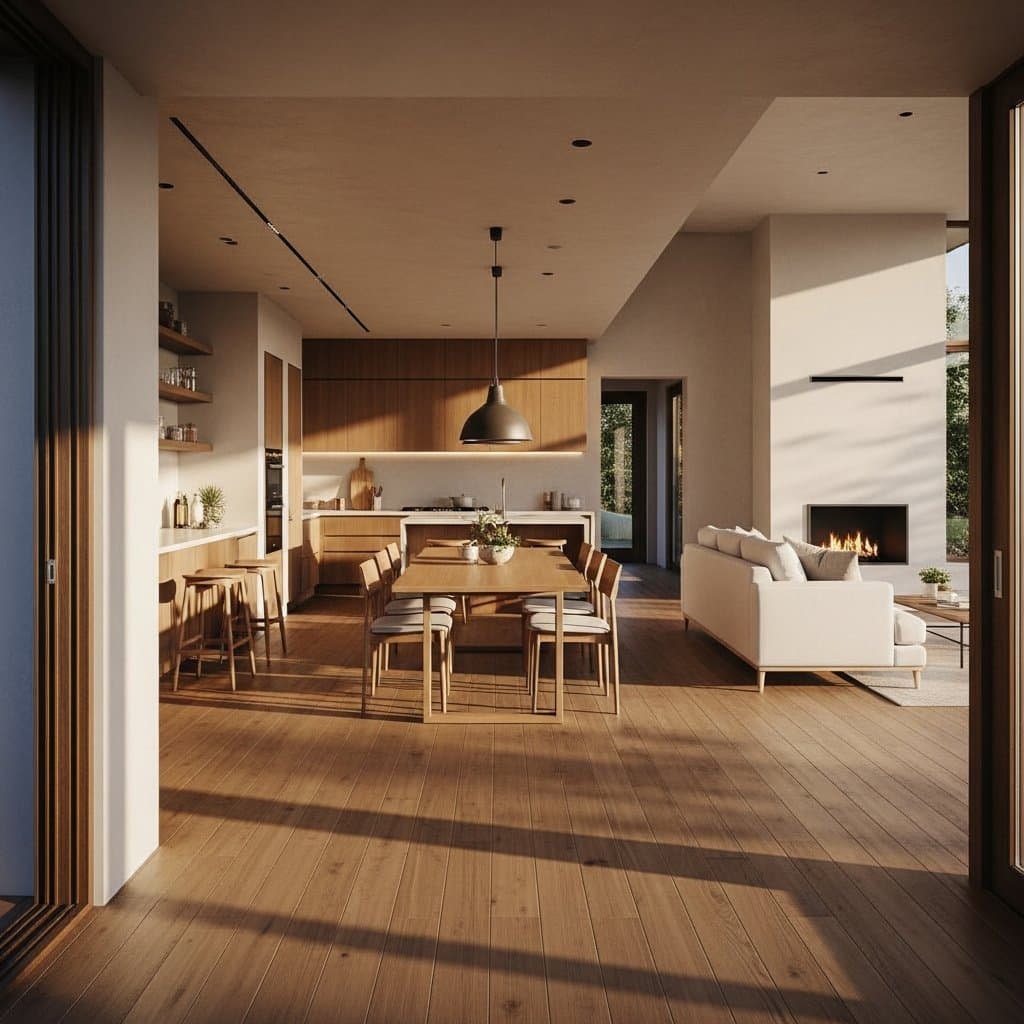
The "Great Room" is the holy grail of modern Australian design—a unified space where cooking, eating, and relaxing happen simultaneously. But there is a fine line between a "Great Room" and a "Warehouse."
If you simply remove all the walls, you lose intimacy. The sound echoes, the dirty dishes are always visible, and there is no sense of cosiness. The architectural secret to a successful Great Room is Zoning. We must define spaces without building walls.
1. The "Invisible" Thresholds
How do you separate the Kitchen from the Living room without a door? We use "Invisible Thresholds" to psychologically mark where one room ends and the next begins.
Material Changes: Switching the flooring material is a powerful divider. For example, using durable stone tiles in the Kitchen (the "Work Zone") and transitioning to warm timber floorboards or a plush rug in the Living area (the "Rest Zone").
Lighting Beams: A bulkhead or a linear strip light running across the ceiling acts as a visual lintel. It signals a transition in function without blocking the view.
2. The Power of the Alcove (Sub-Zoning)
In a large rectangular room, creating a small recess or "nook" can change the entire feel.
The Concept: A Great Room shouldn't just be one big box. By creating an Alcove—for a window seat, a home office, or a breakfast bench—you create a "sub-zone."
The Benefit: This offers a sense of enclosure and privacy (a place to read a book) while keeping the occupant connected to the main social hub. It allows you to be "alone, together."
3. Changes in Volume: Ceilings and Floors
You don't always need a wall to define a space; sometimes you just need a change in volume.
Ceiling Heights: Manipulating the ceiling is a classic architectural trick.
Compress: Dropping the ceiling over the Kitchen creates a focused, intense atmosphere for cooking.
Expand: Raising the ceiling (or using a raked ceiling) over the Living area creates a sense of grandeur and relaxation.
Floor Levels: A Sunken Lounge (conversation pit) instantly defines the living zone. It signals "this is a separate place to stop and sit" without interrupting the sightlines across the house.
Summary
A successful Great Room is not one giant hall, but a collection of distinct "rooms within a room." By using volume, materials, and alcoves to define the zones, you keep the spaciousness of open-plan living while retaining the comfort of a traditional home.