Document - Arborist Report – Balancing tree protection with development potential
What is an Arborist Report and Why Do I Need It?
In many parts of Sydney and across New South Wales, trees are often afforded greater protection than buildings. If your site contains mature or protected trees—or even if significant trees are located on a neighbouring property—you cannot simply build wherever you like.
Councils require clear evidence that a proposed development will not unnecessarily damage the local tree canopy or compromise public safety. That evidence is provided through an Arborist Report. Without it, a Development Application or Complying Development application can be delayed or refused on environmental grounds alone.
Understanding how trees influence design is essential to avoiding costly redesigns and approval delays.
What is an Arborist Report?
An Arborist Report is a formal technical assessment that evaluates the health, structural stability, and life expectancy of trees on or near a development site. It is not a simple removal quote or a general opinion about tree condition.
The report assesses each relevant tree and calculates how close construction activities—such as excavation, footings, or retaining walls—can occur without damaging the root system or destabilising the tree. For Development Applications in particular, Councils generally require this report to be prepared by a qualified Consulting Arborist with a minimum AQF Level 5 certification. Reports prepared by standard tree removal contractors are typically not accepted.
Why do you need it for a DA/CC or CDC?
Whether you intend to remove a tree or retain it, an Arborist Report is usually mandatory.
If tree removal is proposed, and the tree is protected under a Council Tree Preservation Order—commonly applying to trees over a certain height or trunk diameter—the report must provide a valid planning reason for removal. This may include poor health, structural risk, or an unavoidable conflict with a reasonable and compliant building design.
If trees are to be retained, the report becomes even more critical. Council requires assurance that construction works will not sever major roots or compromise the tree’s stability. This is particularly important where excavation occurs near mature trees, as root damage can lead to long-term decline or future failure, posing safety risks to the new building and neighbouring properties.
What information is included in the report?
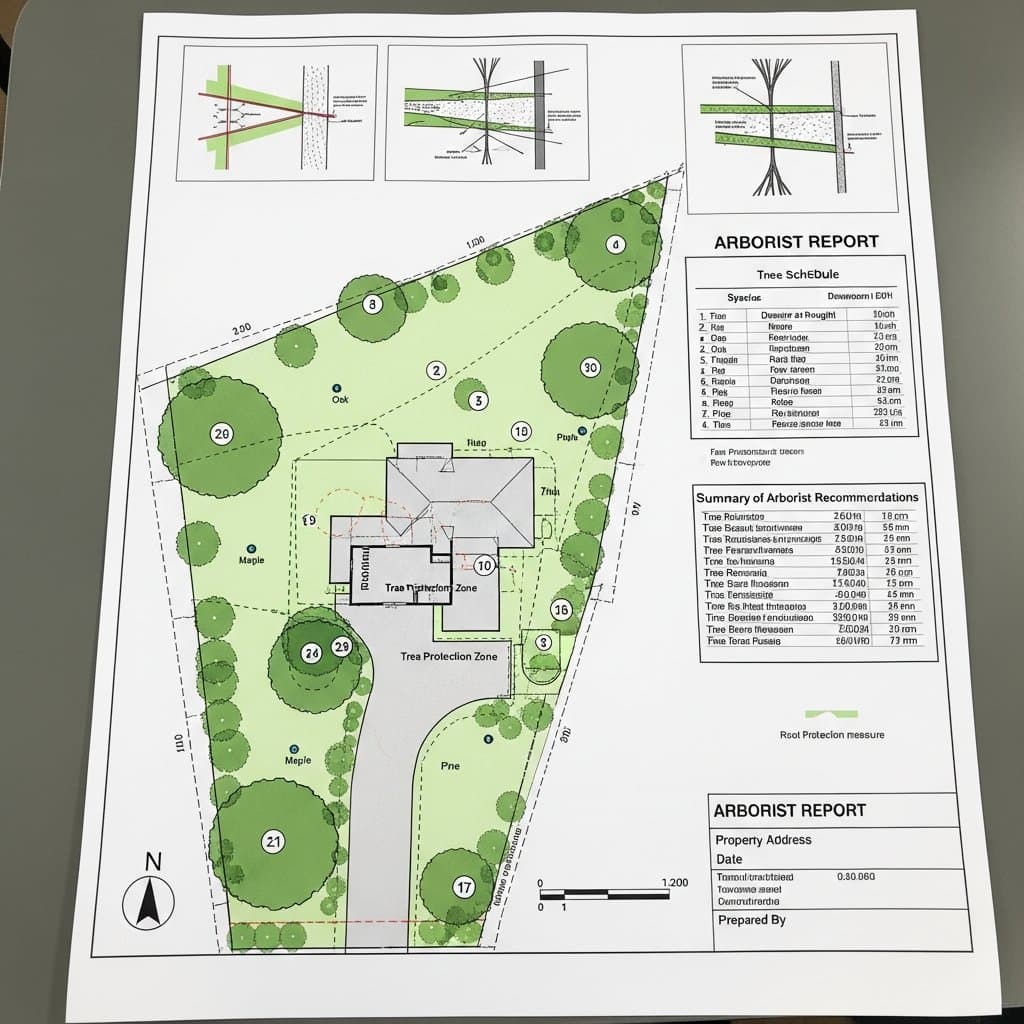
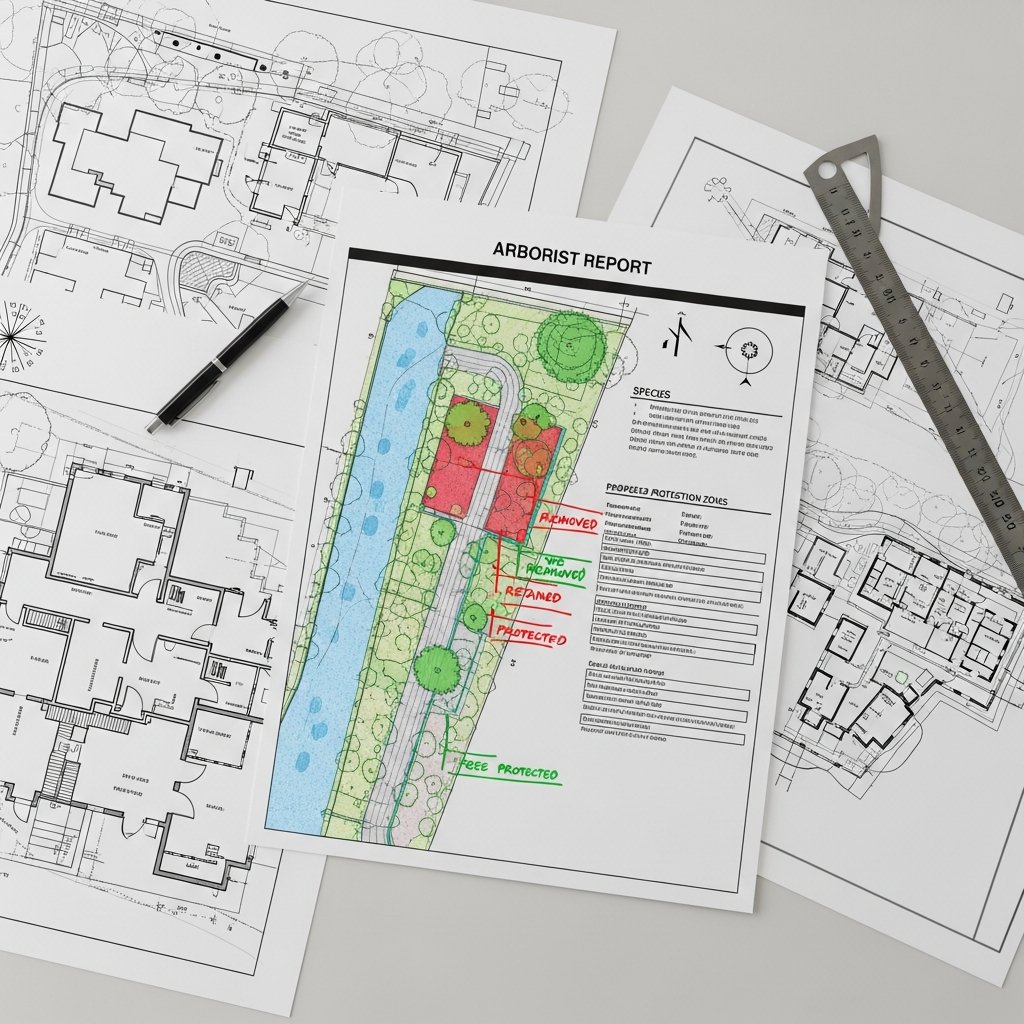
An Arborist Report is prepared using survey information and a site inspection. It documents each tree’s species, size, health, and expected longevity through a Safe Useful Life Expectancy (SULE) rating.
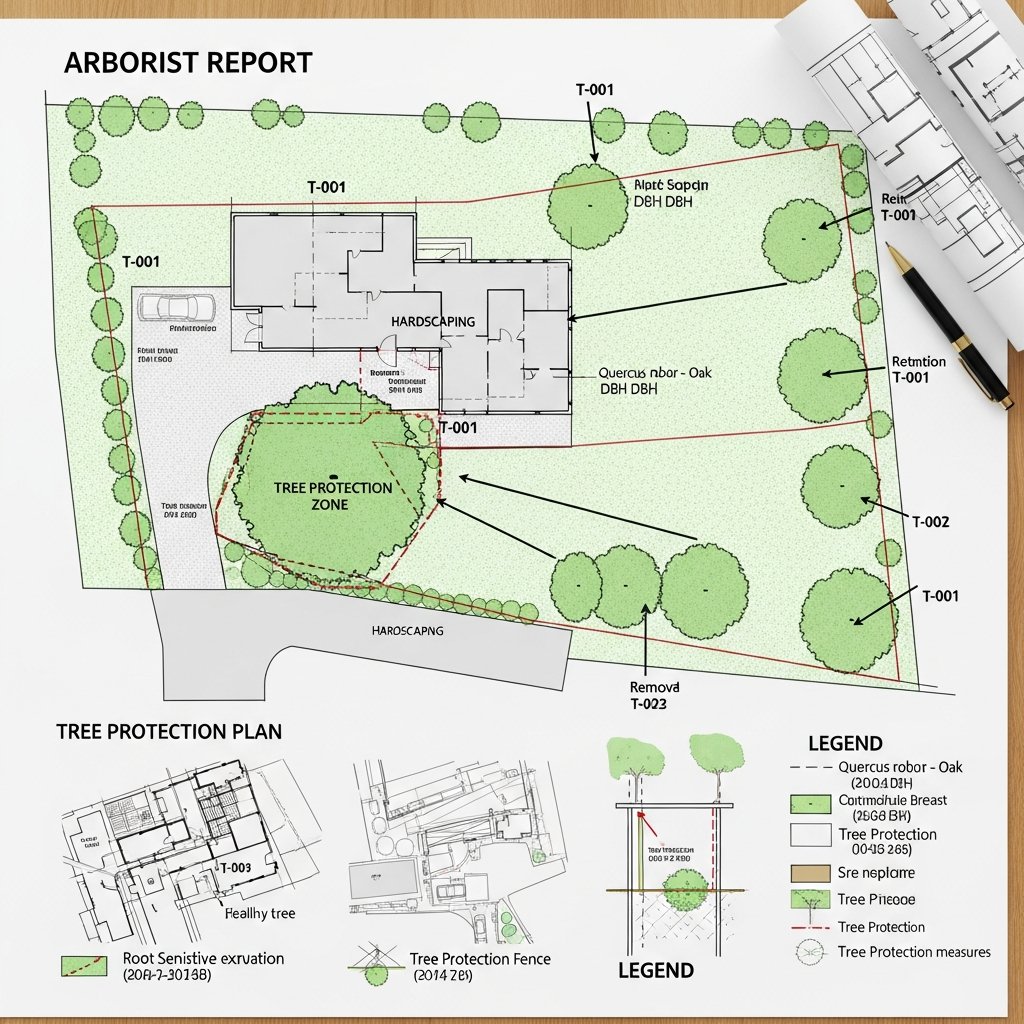
The report then defines key protection areas around each tree. The Tree Protection Zone (TPZ) establishes the area where development is generally restricted to avoid damage to feeder roots, while the Structural Root Zone (SRZ) identifies the critical “no-go” area where excavation would destabilise the tree.
Finally, the report includes a site-specific impact assessment that analyses how the proposed development interacts with these protection zones and recommends mitigation measures where limited encroachment is proposed.
When is it required?
An Arborist Report is required at the time of DA or CDC submission. If an application is lodged without addressing tree constraints—particularly where buildings or pools encroach into protection zones—Council will almost certainly issue a Request for Information or refuse the application outright.
Engaging an arborist late in the process often results in avoidable redesigns and delays, as tree constraints can significantly influence building footprints and structural systems.
Common Pitfalls and Professional Advice
One of the most common oversights is failing to consider trees that are not located on your own property. Tree roots do not respect boundary fences. Large neighbouring trees, such as mature eucalypts, often have Tree Protection Zones extending several metres into adjoining lots.
If a structure such as a swimming pool or basement is designed within a neighbour’s TPZ without arborist justification, Council is unlikely to support it. Identifying these “hidden” constraints early is essential to avoiding refusal.
How to obtain an Arborist Report
You need to engage an AQF Level 5 Consulting Arborist. At OAK Architecture and Design, we take a proactive approach. We overlay the Arborist's "Tree Protection Zones" onto our architectural plans before we finalize the design. If a conflict exists, we can often work with the Arborist to find a solution—such as using "pier and beam" footings instead of a concrete slab—to bridge over the roots and save the design.
Design with nature, not against it.
Tree regulations in NSW can be complex, but they do not need to limit good design. With the right expertise, it is possible to create a high-quality home that respects both planning controls and the natural environment. If you need a team that understands how to design within these constraints, OAK Architecture and Design is here to help.