Document - Flood Risk Management Report – Demonstrating the site can manage flooding without impacts
What is a Flood Risk Management Report and Why Do I Need It?
One of the most common things we hear from clients is: "Why do I need a flood report? I’m nowhere near a river!"
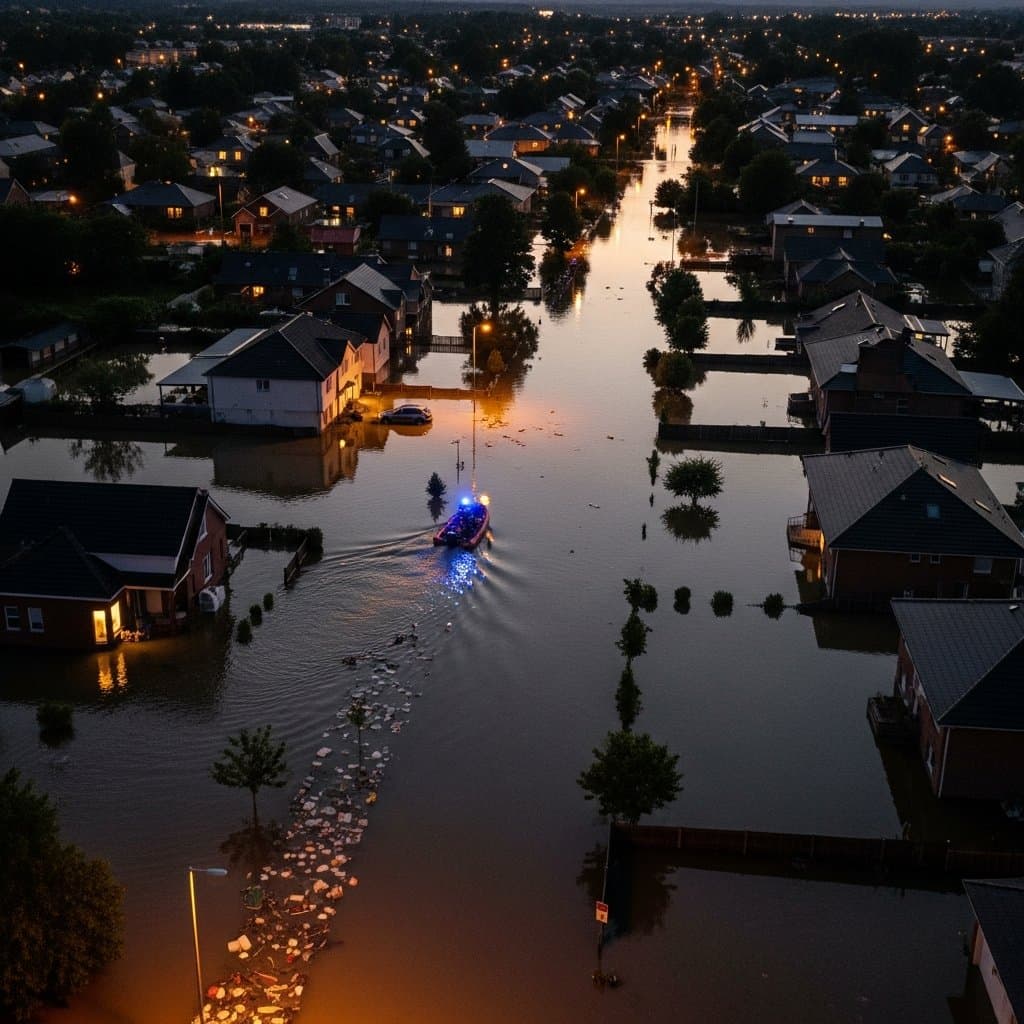
In New South Wales, "flooding" doesn't just mean a river bursting its banks. It often refers to Overland Flow—excess rainwater rushing down streets and through backyards during a storm because the council drains are full.
If your property is tagged as "Flood Prone Land," you cannot build without a Flood Risk Management Report. This document dictates how high your floor needs to be to keep your family and property safe.
What is a Flood Risk Management Report?
A Flood Risk Management Report is a technical study prepared by a specialized Flood Engineer (or a Civil Engineer with flood modelling capabilities).
It analyzes how water moves across your site during extreme weather events. The engineer uses computer models to calculate how deep the water will get and how fast it will flow.
Why do you need it for a DA/CC or CDC?
If your Section 10.7 Certificate (formerly Section 149) tags your land as flood-prone, this report is mandatory.
- Safety of Life: Council needs proof that if a major flood happens, the water won't reach inside your home and you have a safe evacuation route.
- Property Protection: It ensures your valuable assets (floors, electricals, furniture) are built above the likely flood water level.
- Neighbour Protection: The report certifies that your new building (e.g., a garage) won't block the path of the floodwater, which would force it into your neighbour’s house instead.
What information is included in the report?
The most critical number in this report is the Flood Planning Level (FPL).
1% AEP (1-in-100 Year Flood): The theoretical level water reaches in a massive storm.
Freeboard: A safety margin (usually 500mm) added on top of the flood level.
The Result (FPL): The 1% AEP + Freeboard = The minimum height your habitable floor must be built at.
The report also identifies the Hazard Category (H1 to H6), ranging from "safe for people and vehicles" to "unsafe for all."
When is it required?
You need this at the very beginning—before the design is finalized.
If the engineer calculates that the flood level is higher than we thought, we might have to raise your entire ground floor by 1 metre. This changes everything: your roof height, your relationship to the garden, and your stairs.
Common Pitfalls and Professional Advice
Flood requirements often conflict with Height Limit rules. Watch your Head Height. If the flood report says we must raise your floor by 1 metre, but the Council has an 8.5m height limit on the roof, your house gets "squashed" in the middle. At OAK Architecture and Design, we identify this squeeze early. We can often argue for a variation to the height limit based on the flood constraints, or we use smart structural solutions (like flat roofs) to keep the rooms spacious despite the restrictions.
You generally cannot build a solid brick fence on flood-prone land because it acts like a dam. You will likely need open-style fencing (like timber slats or pool fencing) to let the water pass through.
How to obtain a Flood Report
You need to engage a specialized Flood Engineer.
How we help: We send your Survey Plan to the engineer to run the model. We then work closely with them to interpret the results. If the flood levels are high, we don't just accept it—we look for design solutions, such as split-level floors or flood-compatible materials (like polished concrete instead of carpet) in the lower areas to ensure your home is both safe and stylish.
Don't let water wash away your plans.
Building on flood-prone land is complex, but it doesn't mean you can't have a beautiful home. If you need a team that knows how to navigate these technical challenges, contact OAK Architecture and Design today.