Designing Social Spaces Part 4 - Technical System
Technical Systems for Living Spaces: Integrating Light, Power, and Climate
While the physical layout of a room dictates how we move, the "invisible" systems—lighting, electrical, and mechanical—dictate how we feel. A beautifully proportioned room can still feel uncomfortable if it is poorly lit, cluttered with extension cords, or dominated by noisy air conditioning units. In modern open-plan living, these systems require careful integration so they support the architecture rather than competing with it.
Architectural Integration of Climate Control
In the modern Australian context, heating and cooling are predominantly handled by reverse-cycle split systems or ducted air conditioning. For the designer, the challenge is not just thermal comfort, but visual integration. These systems are essential, but they are rarely beautiful.
The placement of these units should be considered early in the design phase to avoid visual clutter. For ducted systems, this often involves designing bulkheads or dropped ceilings in hallways or less critical zones to house the ductwork and units, keeping the ceiling lines in the main living areas high and clean. The goal is to ensure that the air registers (vents) are the only visible element, and even these can be selected to match the linear lines of the room.
If wall-mounted split systems are used, their location is critical. They should never be the focal point of a room, such as above a fireplace or directly facing the main entrance. Instead, they are best positioned above doorways or in areas where joinery can help obscure their bulk. Furthermore, careful thought must be given to the airflow; air should not blow directly onto the main seating clusters, which can create discomfort for those sitting still for long periods.
Electrical Planning for Open-Plan Living
The shift towards large, open-plan "Great Rooms" has created a specific electrical challenge: the lack of walls. When a sofa is positioned in the centre of a room rather than against a wall, there is often nowhere to plug in a reading lamp or charge a device.
This "floating furniture" problem is best solved during the construction phase by installing floor-mounted power outlets beneath the intended location of the sofa. This eliminates the need for dangerous and unsightly extension cords trailing across the floor. Similarly, lighting controls must follow the logic of movement through the house. In a room with multiple entry points—such as a living area accessible from both the foyer and the kitchen—two-way switching is essential. A user should be able to control the main lighting from any entry point, ensuring they never have to traverse a dark room to find a switch.
Lighting Design: The Layering Principle
Lighting is arguably the most powerful tool for creating atmosphere, yet a common mistake is to rely solely on a grid of fixed downlights. This approach flattens the room, creating harsh shadows and a clinical atmosphere. Effective lighting relies on a technique called "layering," which blends three distinct types of light.
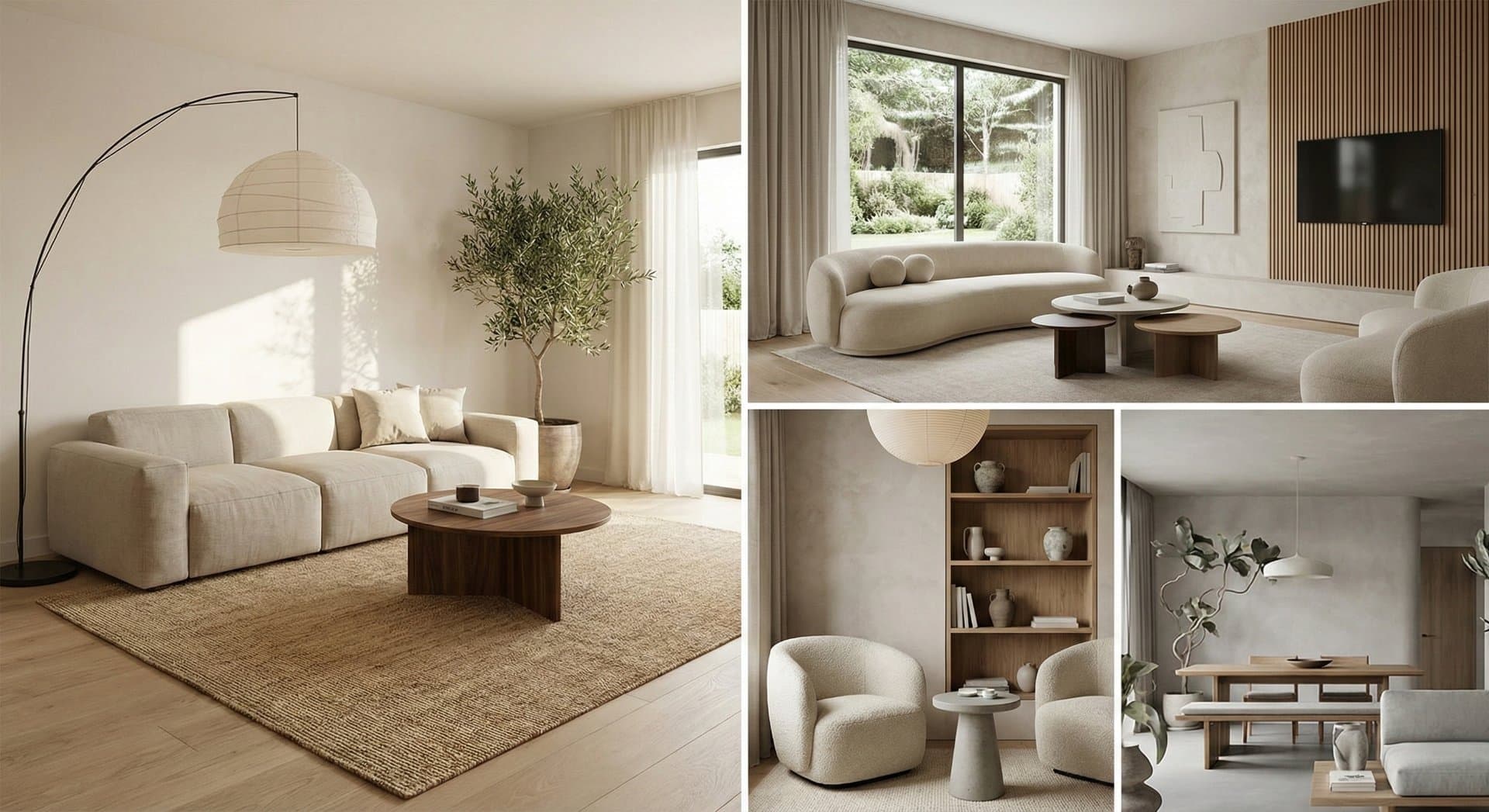
Ambient lighting provides the base level of illumination for safe movement. In rooms with standard ceiling heights (2.4 metres), heavy use of pendant lights can make the space feel smaller. In these cases, wall sconces or floor lamps that reflect light off the ceiling are effective at making the room feel more spacious. Conversely, homes with high ceilings (2.7 metres and above) offer the volume necessary for cove lighting or dropped pendants that bring the scale of the room down to a more human level.
Task lighting is essential for specific activities like reading or working. In a leisure space, this is best provided by portable floor or table lamps rather than overhead downlights. Portable lamps bring the light source down to seated eye level, reducing glare and casting a warmer, more flattering light on people’s faces.
Finally, Accent lighting is used to highlight architectural features, artwork, or views. Rather than washing the floor with light, adjustable recessed fixtures (gimbals) or wall washers can be directed towards a feature wall or painting, adding depth and drama to the space.
Dining Room Considerations
The dining table is often the centrepiece of the social home, and its lighting requires specific consideration. Traditionally, a chandelier or pendant is centered in the room, but this creates a strong "visual expectation" that the table must remain fixed directly beneath it. If the table is moved for a larger gathering, the light can look awkward hanging over empty space.
For homeowners who desire flexibility, it is often better to avoid a low-hanging central pendant. Semi-flush fixtures or grouped adjustable downlights can cross-illuminate the table area effectively without dictating the exact furniture placement.
If a pendant is preferred, the hanging height is critical for comfort. The bottom of the fixture should generally sit between 750mm and 850mm above the table surface. This specific height allows diners to see each other clearly across the table without glare, while maintaining an intimate pool of light on the dining surface.