Bedroom - Part 1 - Bed Sizes and Layouts
Bedroom Design Basics: Bed Sizes and Layouts
By OAK Architecture and Design
We spend roughly one-third of our lives in the bedroom. Beyond just sleep, it serves as a private sanctuary—a retreat from the noise of the household. However, designing this sanctuary is governed by one massive, immovable object: the bed.
A common mistake in floor plan design is underestimating the dominance of the bed. It dictates circulation, window placement, and the functionality of the room. Here is the architectural logic behind sizing and positioning your sleep space.
Australian Bed Sizes: The Critical Math
Before drawing a single wall, we must know the dimensions of the bed. A room designed for a Double bed will feel claustrophobic if you try to squeeze in a King.
Standard Australian Mattress Dimensions:
Single: 915mm x 1880mm (Ideal for children’s rooms or guest bunks).
King Single: 1070mm x 2030mm (The versatile choice for teenagers or tall guests).
Double: 1380mm x 1880mm (Minimum for couples, but tight).
Queen: 1530mm x 2030mm (The standard for most master suites and guest rooms).
King: 1830mm x 2030mm (The ultimate luxury, but requires a significantly wider room).
Super King: 2030mm x 2030mm (A square bed, becoming popular in high-end builds).
Architect’s Note: The dimensions above are for the mattress only. You must add 100mm–150mm to the length and width to account for the bed frame and headboard. A "King" room isn't just 1830mm wide; it needs to accommodate a roughly 2000mm furniture footprint.
Positioning: The "Command Position"
Where should the bed go? The most effective layout follows the principle of the "Command Position," a concept rooted in psychology and security.
Sightlines: You should be able to see the door from the bed, but you should not be directly in line with it. This provides a sense of control and privacy.
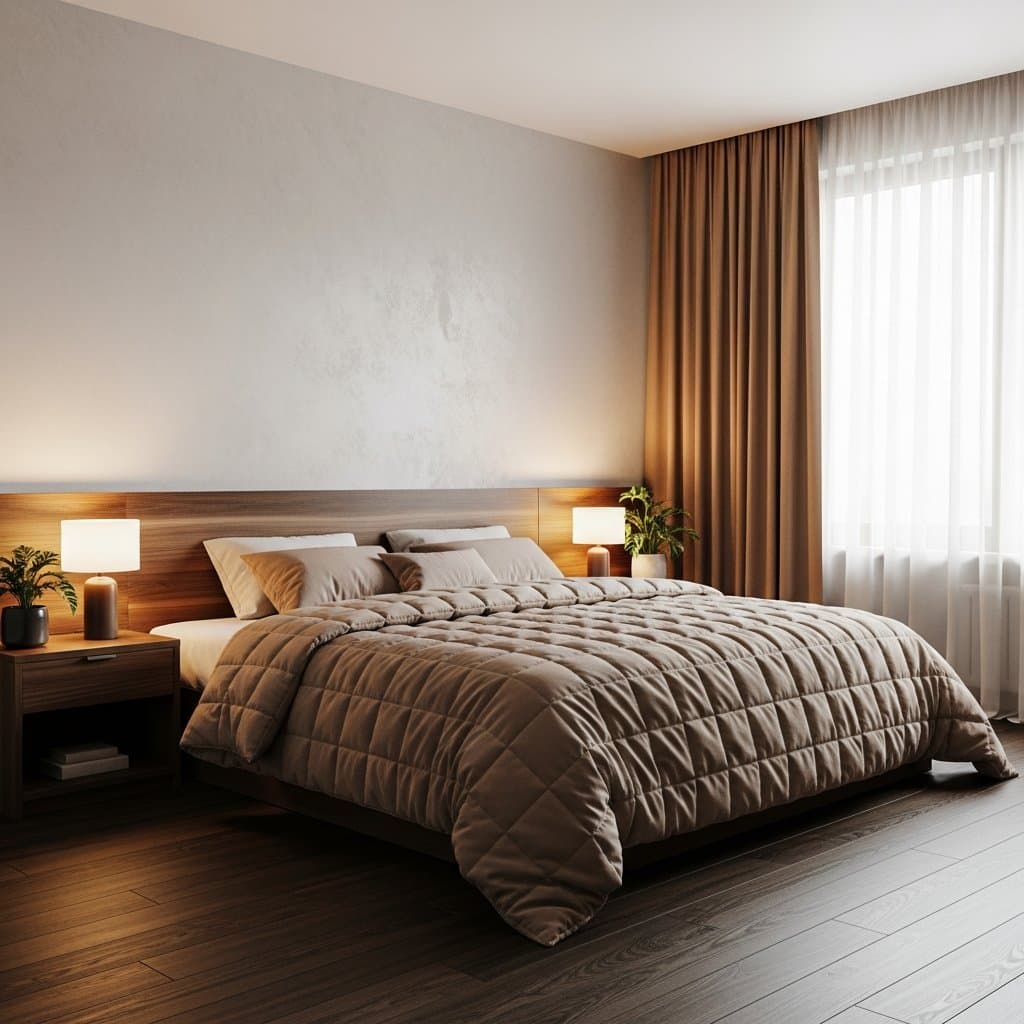
The Headwall: The bedhead should anchor against a solid wall. Avoid placing the bedhead against a window (drafts and poor acoustics) or "floating" it in the middle of the room (loss of grounding).
Noise Buffering: Never place the bedhead on a wall shared with a toilet, shower, or kitchen. If unavoidable, soundproofing insulation and joinery buffers are essential.
Clearances: The "Make the Bed" Rule
A room is only functional if you can move through it. The "absolute minimum" code requirements are often uncomfortable for daily living. We design for "Comfort Clearances."
Side Clearance: You need a minimum of 600mm to 750mm on either side of the bed to comfortably walk, access a bedside table, and make the bed without hitting your shins.
Foot Clearance: At the end of the bed, allow at least 900mm if it is a major walkway (e.g., to an ensuite). If it is just a wall, 600mm is sufficient for passage.
Wardrobe Conflict: If the wardrobe doors swing open towards the bed, you need enough space to stand and open the door. Allow 1200mm between the bed and the robe; anything less than 1000mm will feel like a squeeze.
Furniture Layouts
The Minimal Room (3m x 3m): Fits a Double or Queen bed pushed against one wall (not ideal for couples) or centered with minimal bedside tables. Storage is usually a reach-in robe.
The Standard Suite (3.6m x 3.6m): Comfortably fits a Queen bed with two bedside tables and a chest of drawers on the opposite wall. This allows for good circulation on all sides.
The Master Retreat (4.2m+): Required for a King bed. This width allows for substantial bedside tables and potentially a reading chair in the corner.
Summary
The bed is the king of the room. By selecting the right size for your specific floor area and respecting the 600mm+ clearance zones, you ensure the room feels spacious and restful rather than cluttered.
Are you ready to build a home where every detail is designed for your lifestyle? Contact OAK Architecture and Design to design your dream home.