Bathroom - Part 3 - Vanities, Mirrors, and Lighting
Vanities, Mirrors, and Lighting: The Grooming Zone
By OAK Architecture and Design
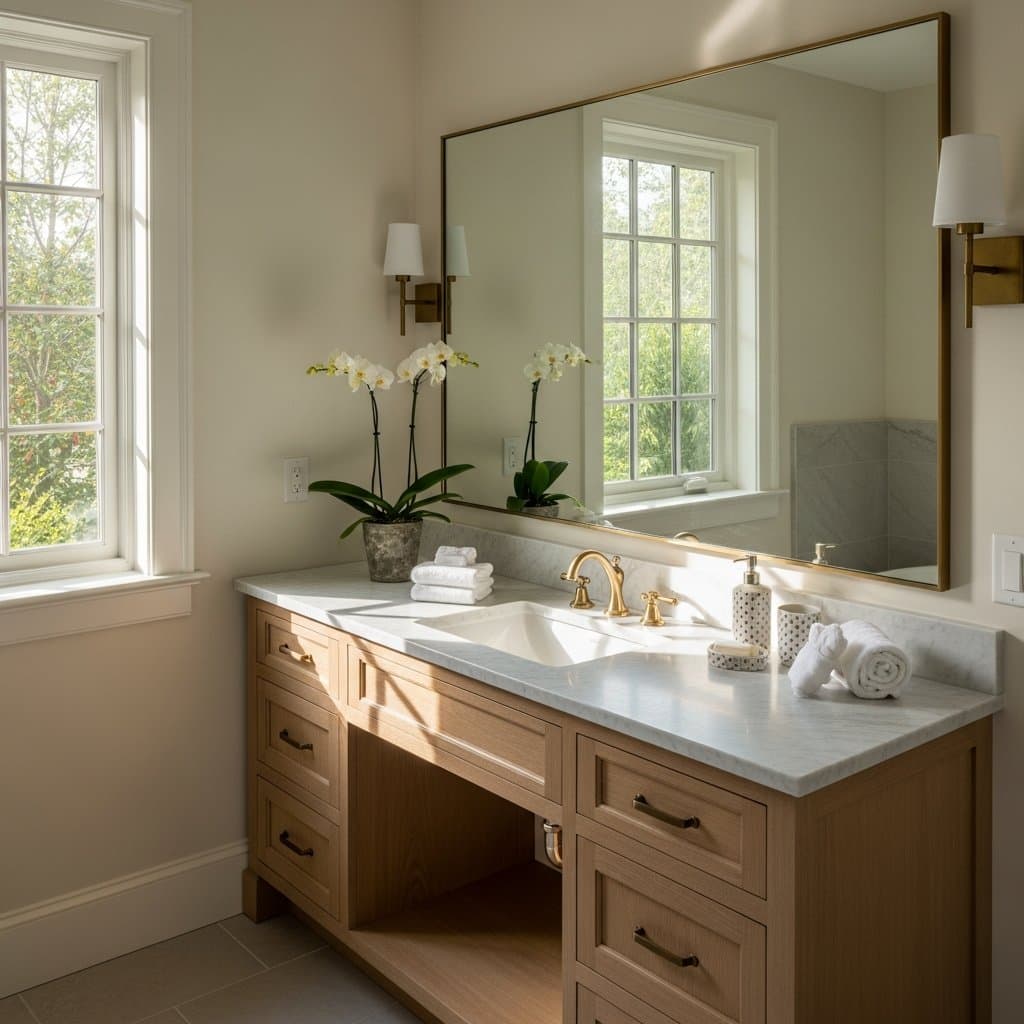
The vanity area is the command centre of the bathroom. It is where you brush your teeth, apply makeup, and store the daily essentials. Yet, it is often designed purely for aesthetics, resulting in bench space that is too small or lighting that casts unflattering shadows.
A great vanity balances storage volume with ergonomic clearance and specific lighting rules.
1. The Vanity: Layout and Ergonomics
The size of your vanity dictates the functionality of the room. A common request is "double basins," but this often comes at the cost of bench space.
Single vs. Double Basins
The Double Basin Rule: You need a minimum vanity length of 1500mm (ideally 1800mm) to comfortably fit two basins. If you squeeze two sinks into a 1200mm vanity, you are left with zero bench space for a hair straightener or toothbrush holder.
The Single Basin Advantage: In a 1200mm space, a single offset basin is often superior. It gives you one generous washing station and a huge expanse of uninterrupted benchtop for two people to stand and groom side-by-side.
Mounting Height
Floating (Wall-Hung): The standard for modern bathrooms. By lifting the cabinetry 200mm–300mm off the floor, you create an illusion of space (seeing the floor tiles continue to the wall makes the room feel wider).
Height Standard: The Australian standard vanity height is 900mm. However, if you use a vessel basin (a bowl sitting on top of the bench), you must lower the joinery to roughly 750mm–800mm so the rim of the basin sits at comfortable hand-washing height (approx. 900mm).
2. Mirrors and Shaving Cabinets
The mirror is not just a reflective surface; it is the most valuable storage zone in the room.
The Shaving Cabinet (Recessed) We almost always recommend a recessed shaving cabinet (mirror cabinet) over a flat glued-on mirror.
Storage Logic: Items you use daily (deodorant, toothpaste, face cream) should be at eye level. Storing these in a deep drawer under the sink requires bending down twice a day.
The Recess Detail: Ideally, the cabinet is recessed into the wall cavity so the mirror sits flush (or protrudes only slightly). This creates a sleek look without the bulk of a heavy cabinet looming over the sink.
Mirror Height The mirror should extend high enough to accommodate the tallest family member. A top height of 2000mm–2100mm aligns with the top of the door frames and shower screens, creating a neat architectural line.
3. Lighting: Banishing Shadows
Lighting is the most common failure in bathroom design.
The "Downlight Disaster" Placing a single downlight directly above your head while standing at the vanity creates strong overhead shadows. This casts dark circles under your eyes (the "panda effect") and accentuates wrinkles, making shaving or applying makeup difficult.
The Solution: Face-Level Lighting For grooming, light should hit your face evenly from the front, not from above.
Wall Sconces: Place a light on either side of the mirror at roughly eye level (1600mm–1700mm). This cross-illumination eliminates shadows.
LED Mirror Backlighting: A soft glow behind the mirror provides excellent ambient light for nighttime visits without waking you up fully.
Colour Temperature: Always use Cool White (4000K) or Daylight (5000K) for bathroom vanity lights. This mimics natural light and ensures you don't walk out of the house with mismatched foundation or missed shaving spots.
Summary
The vanity area is a workstation. By prioritizing bench space over a second sink, choosing face-level lighting, and utilizing eye-level storage, you create a space that makes your morning routine effortless.