Utility - Part 6 - The Home Bar
The Home Bar & Wine Cellar: Entertaining in Style
By OAK Architecture and Design
In the last decade, the Australian home has absorbed the role of the local pub and the cocktail lounge. Whether it is a dedicated joinery unit in the living room or a climate-controlled cellar under the stairs, the "Home Bar" is now a standard request in luxury renovations.
However, a bar is more than just a shelf for gin bottles. It is a specialized wet area that requires specific depths, heights, and electrical planning to function smoothly during a party.
1. Location Strategy: The "Outpost"
A home bar is effectively a "satellite kitchen." It prevents guests from crowding the main kitchen island while you are trying to plate up dinner.
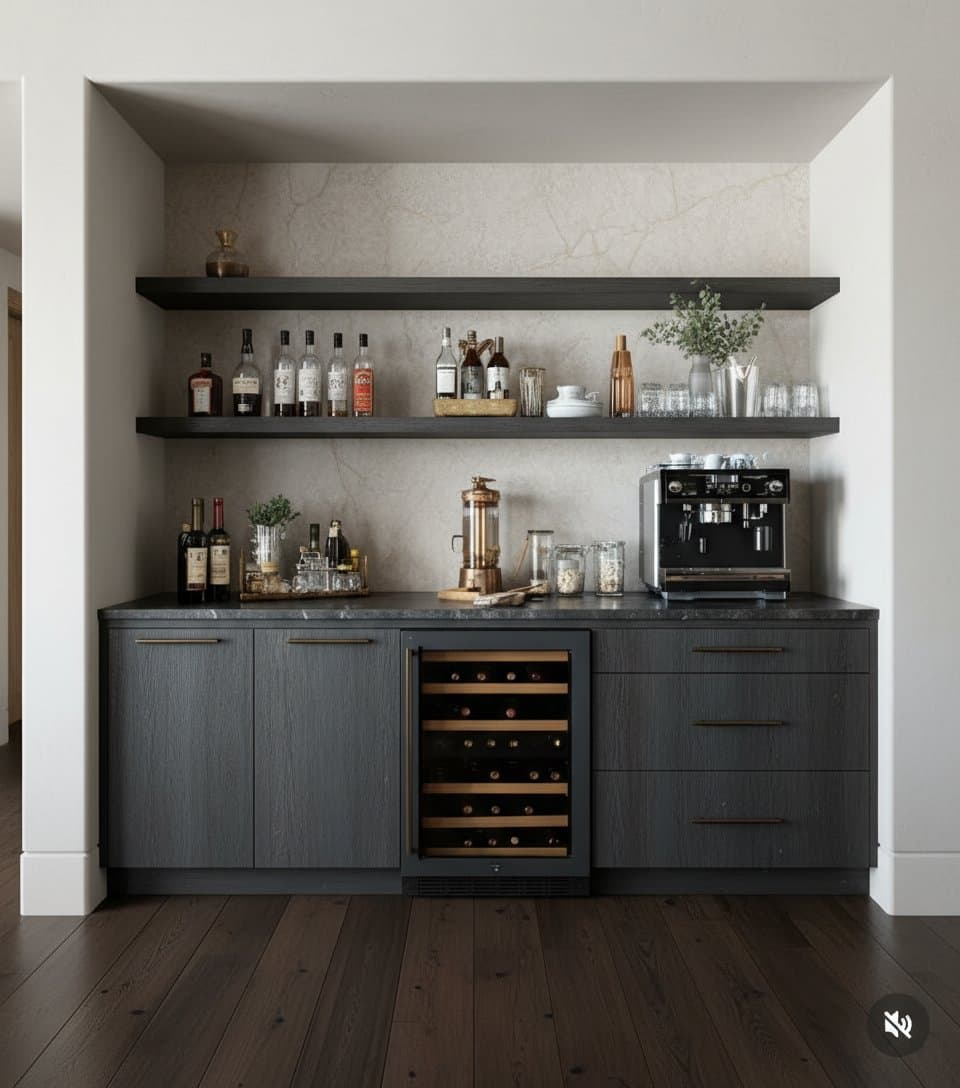
The "Dry Bar" (Joinery Nook): Often located in the dining or living room. It includes cabinetry for glassware, a benchtop for pouring, and a wine fridge. It does not have a sink.
The "Wet Bar" (Fully Plumbed): This includes a small prep sink. It is essential if the bar is far from the main kitchen (e.g., in a basement cinema or an upstairs retreat) so you aren't running up and down stairs to rinse a shaker.
The Under-Stair Cellar: The triangular void under a staircase is often wasted space. With glazed doors and insulated walls, it can become a stunning visual feature for wine storage.
2. The Dimensions: Bottle Logic
Standard kitchen dimensions often don't work for bars because bottles and glasses have unique shapes.
Depth Rules
Bench Depth: A standard kitchen bench is 600mm. A bar bench can be reduced to 450mm–500mm if you are not installing a dishwasher. This saves valuable floor space in a living room.
Overhead Cupboards: Standard overheads are 300mm deep. However, wine glasses are often wider than coffee mugs. We recommend a depth of 350mm to ensure large red wine stems don't stop the doors from closing.
Height Rules
Spirit Bottles: If designing a shelf for spirits, you need a clearance of at least 330mm–350mm (standard spirits) to 400mm (tall top-shelf bottles).
The Pouring Bench: Standard height is 900mm (kitchen height), but raising a bar section to 1050mm–1100mm hides the mess of lemons and ice buckets from the guests seated on the sofa.
3. Wine Storage: Fridge vs. Cellar
There is a big difference between "storing" wine and "aging" wine.
The Wine Fridge (Service Temp)
Integration: Ensure you check the ventilation requirements. Most under-bench wine fridges front-vent, but some require air gaps at the back.
Size: A standard 600mm wide under-bench unit holds approx. 40–50 bottles.
The Cellar (Long Term)
The Environment: Wine hates three things: UV light, vibration, and temperature fluctuation.
Technical Fit-out: You cannot just put a glass door on a cupboard and call it a cellar. You need:
Insulation: To maintain a steady 14 degrees.
Glazing: UV-treated glass to protect the labels.
Climate Control: A dedicated cooling unit (not a standard A/C) that maintains humidity so corks don't dry out.
4. Materials: Alcohol is Corrosive
Since alcohol is corrosive (acidic) and red wine stains, durability is key.
Benchtop: Avoid Marble (it etches instantly with citrus). Opt for Granite, or Porcelain, which are non-porous and stain-resistant. Porcelain & Sintered Stone are the new industry standard for durability. It is non-porous, heat resistant, and UV stable. Unlike marble, it won't etch if you spill lemon juice on it. Choose Natural Granite if you want natural stone, Granite is the safest choice. It is far harder and more resistant to chemical attack than Marble or Limestone.
Splashbacks:
A smoked mirror splashback is a classic bar trick. It doubles the visual depth of the bottles and adds a "moody" evening atmosphere to the room.
Stone Slab: Running the benchtop material up the wall creates a seamless, luxurious look that is easy to clean.
Textured Tiles: A "Kit Kat" (finger tile) or a handmade subway tile adds texture and catches the under-cabinet lighting beautifully.
Metal Sheet: For a true speakeasy vibe, antiqued brass or copper sheeting looks incredible and develops a patina over time.
Summary
A home bar creates a destination within your house. By getting the technical dimensions right for bottle heights and fridge ventilation, you turn a joinery niche into a functional entertaining zone that invites guests to stay a little longer.