The Art of Circulation - Part 1 - Entrance - Creating a Welcoming & Functional Foyer
By OAK Architecture and Design
They say you never get a second chance to make a first impression. In architecture, your entrance does exactly that. However, beyond curb appeal, a foyer serves a critical function: it is the bridge between the outside world and your private sanctuary.
A poorly designed entrance becomes a bottleneck of clutter and confusion. A well-designed one offers a moment of "psychological transition"—a pause that allows you to leave the stress of the street behind before entering the heart of the home.
Here is how we approach the design of foyers and entry circulation to improve your living lifestyle.
Key Principles of Entry Design
Designing an entrance isn't just about picking a nice door; it is about managing how people and air move through your home.
1. The Transition Zone (Public vs. Private)
We rarely want to open a front door and plunge directly into the living room conversation. We need a buffer.
The "AirLock": A foyer acts as a thermal buffer, keeping heat out in summer and warmth in winter.
Visual Privacy: The layout should screen private areas (like bedrooms or a messy kitchen) from the view of someone standing at the front door.
The "Inner Sanctum": As architectural theorists note, a graceful transition allows you to mentally "settle down" into the intimacy of the house.
2. Weather Protection and Orientation
In New South Wales, our weather can shift rapidly from harsh sun to heavy rain. Your entrance must offer physical shelter.
Recessed vs. Projecting: A recessed entrance (indented into the façade) generally offers better protection from wind and rain than a door that simply sticks out.
Overhangs: A deep roof overhang is essential. It allows you to stand comfortably while searching for keys without getting soaked and protects the door joinery from the harsh Australian sun.
3. Layout & Functionality: The "Drop Zone"
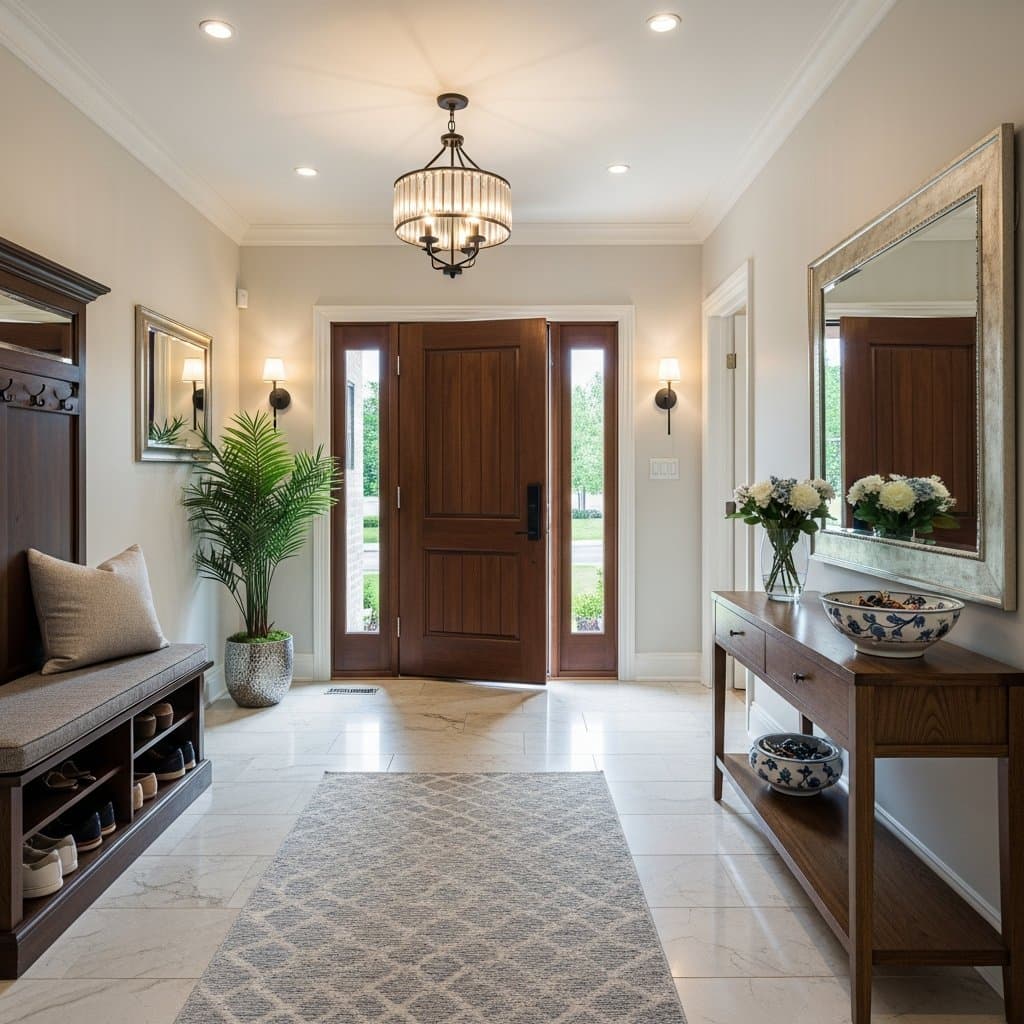
Modern families need more than a formal hall; they need utility. We often integrate the concept of a "Mudroom" or a dedicated "Drop Zone" into our entry designs.
The Essentials Checklist:
The Landing: Ensure you have a flat landing on both sides of the door (minimum 900mm–1000mm deep) for safety and ease of use.
Traffic Flow: The walkway should be at least 1.2m wide to allow two people to pass comfortably.
The "Drop Zone": Dedicate a specific spot for keys, mail, and charging phones. If this isn't planned, these items end up on the kitchen island.
Storage: Integrated joinery for shoes and bags is non-negotiable to prevent the "messy to tidy" conflict.
Accessibility: Consider maneuvering clearance for wheelchairs or prams. A wider entry is always more luxurious and future-proof.
4. Privacy: The Visual Buffer
The front door should invite people in, but it shouldn't give away all your secrets.
Blocking the Sightline: Avoid a layout where the front door opens directly onto the living room sofa or, worse, the kitchen sink.
The "Deflection" Wall: If your floor plan is open, use a joinery unit or a screen to create a "deflection." This forces guests to turn slightly before revealing the main view. It builds anticipation and ensures that a delivery driver standing at the door can't see your family eating dinner.
5. First Impressions: Volume and Light
How do you make an entry feel expensive? You play with scale. There are two distinct strategies we use, depending on the emotion you want to evoke.
Strategy A: The Grand Void (Immediate Impact) This is the popular choice for modern luxury homes. By removing the floor above the entry, we create a double-height void (5-6 metres high) the moment you walk in.
The Effect: It signals "luxury" instantly. The sheer vertical scale makes the home feel massive and flooded with light.
The Feature: This is the perfect location for a statement chandelier. A large pendant light hanging in a void draws the eye up and fills the vertical space, acting as a piece of illuminated sculpture.
Strategy B: Compression and Release (The Journey) This is a classic architectural technique (famously used by Frank Lloyd Wright) for those who prefer a more subtle reveal.
The Effect: We keep the entry ceiling relatively low (standard 2700mm) or intimate ("Compression"). Then, as you walk through the hallway into the main living area, the ceiling suddenly rises to a void or a raked ceiling ("Release").
The Result: This contrast makes the main living room feel explosively large and grand by comparison. It guides the guest into the heart of the home rather than stopping them at the door.
A great entrance is a balance of protection, storage, and flow. It should welcome your guests but protect your privacy.
Are you planning a new home in the Sydney region and want to ensure your layout flows perfectly? Contact OAK Architecture and Design today to discuss your project.