Document - Stormwater Management Plan – Managing rainwater responsibly across the site
What is a Stormwater Management Plan and Why Do I Need It for My DA or CDC?
Every time you add a new roof, driveway, or paved area, you change the way rainwater flows across your land. From Council’s perspective, that water remains your responsibility until it is safely and legally discharged off your property.
If stormwater is not managed correctly, it can flood neighbouring properties, damage public infrastructure, or cause ongoing damp issues within your own home. For this reason, a Stormwater Management Plan is one of the most closely scrutinised documents in any Development Application (DA) or Complying Development Certificate (CDC) in New South Wales.
Understanding these requirements early can save you from costly redesigns and construction surprises later.
What is a Stormwater Management Plan?
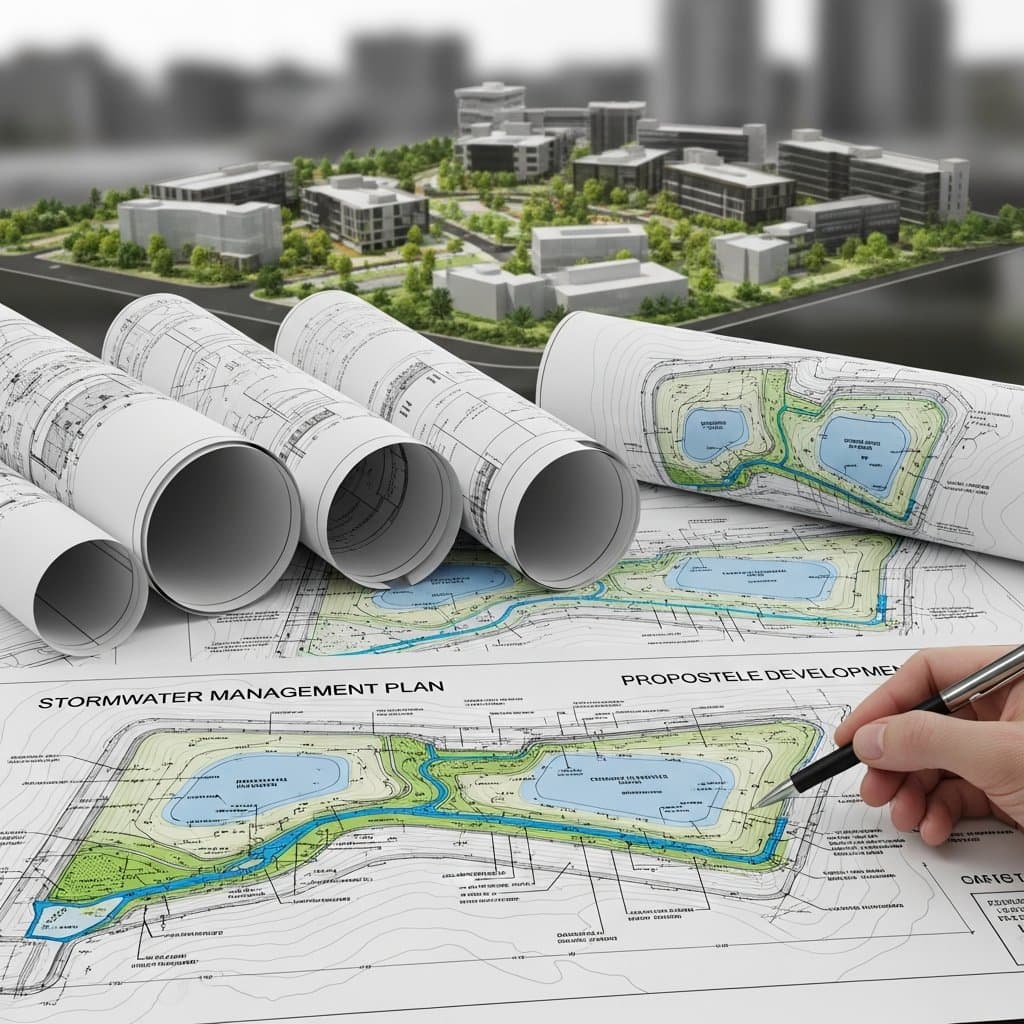
A Stormwater Management Plan is a technical engineering drawing prepared by a qualified Civil or Hydraulic Engineer. It shows, in detail, how rainwater will be collected from roofs and hard surfaces such as driveways, patios, and paths, how it will be conveyed through gutters, pits, and underground pipes, and where it will ultimately be discharged.
This plan is not simply about plumbing. It is a flood control document that demonstrates to Council or a private certifier that your development will not increase stormwater impacts on neighbouring properties or the public drainage system.
Why do you need it for a DA/CC or CDC?
Whether you are lodging a Development Application (DA) with the Council or a Complying Development Certificate (CDC) with a private certifier, the requirement is the same: strict "zero impact" compliance.
Mandatory Validation: You cannot get a DA or CDC approved without showing a legal "Point of Discharge" (where the water leaves your land). Certifiers are legally blocked from issuing a CDC without this engineering design.
Flood Prevention: It ensures water doesn't pool against your house (causing damp issues) or run off into your neighbour's living room (causing legal issues).
BASIX Compliance: The stormwater plan shows your rainwater tank, which is required to meet the water targets in your BASIX Certificate.
What information is included in the plan?
While the plan may look similar to an architectural site plan, its focus is entirely on drainage infrastructure and ground levels. It identifies the layout of all gutters, pits, and underground pipes, the location and capacity of rainwater tanks, and the exact point at which water leaves the site—typically the street kerb or a registered drainage easement.
The plan also addresses sediment and erosion control measures, demonstrating how soil and debris will be prevented from washing into the street during construction.
One of the most critical elements is the assessment of whether On-Site Detention is required.
Understanding On-Site Detention (OSD)
On-Site Detention, commonly referred to as OSD, is often the biggest surprise for homeowners, particularly in Sydney. Many councils require new developments to temporarily store stormwater during heavy rainfall and release it slowly into the public system.
This is typically achieved through a detention tank installed underground, often beneath a driveway or backyard. While effective in protecting public infrastructure from flooding, OSD systems can add cost and take up valuable space on your site. Whether an OSD system is required—and how large it must be—is determined through the Stormwater Management Plan.
When is it required?
A concept-level Stormwater Management Plan is usually required at the time of DA or CDC submission. This allows the approval authority to confirm that the drainage strategy is feasible and compliant in principle.
A more detailed design is then prepared for the Construction Certificate (CC). This version includes precise pipe sizes, levels, and construction details that the builder will follow on site.
Common Pitfalls and Professional Advice
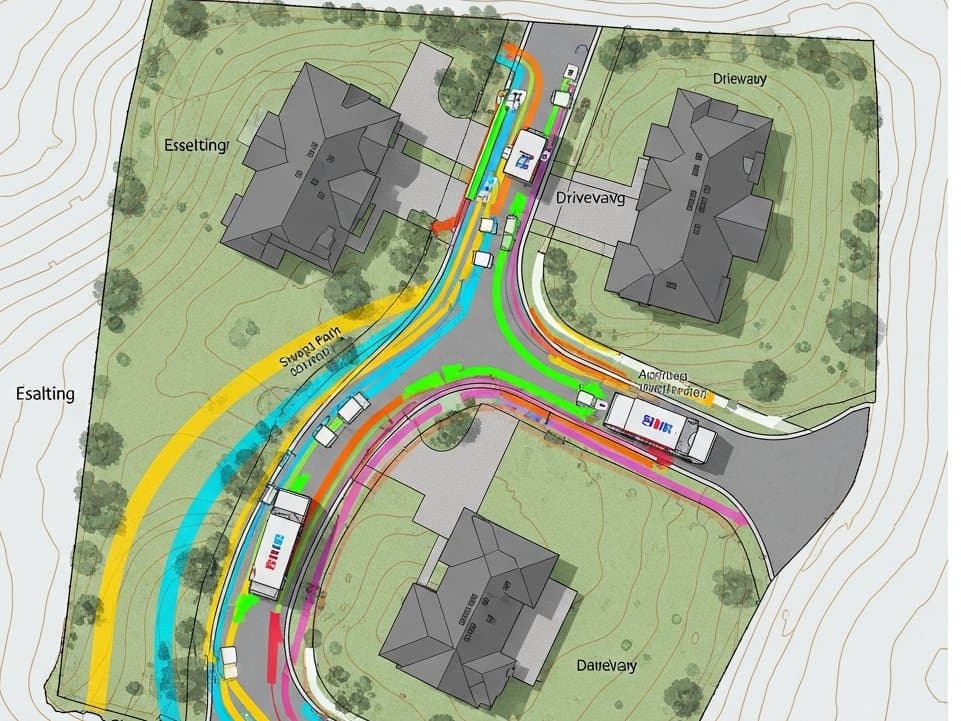
Stormwater systems rely on gravity, and this simple fact causes many design challenges. Where possible, drainage should flow naturally downhill to the street. If a site slopes away from the road, water may need to be pumped back up to the kerb, introducing mechanical systems that require ongoing maintenance and can fail during power outages.
Another critical issue is the availability of drainage easements. If your property slopes away from the street and there is no registered easement allowing stormwater to pass through a neighbouring property, development can be severely restricted or even made impossible. This is why drainage constraints must be identified at the very beginning of the design process.
At OAK Architecture and Design, we check these conditions from day one. We work closely with civil and hydraulic engineers, providing them with accurate survey information so ground levels are properly understood. We also coordinate drainage layouts with the architectural and landscape design, ensuring pipes, pits, and tanks are integrated discreetly rather than dominating the outdoor spaces.
Don't let drainage drain your budget.
Stormwater design can be complex, particularly on sloping or constrained sites, but it does not need to compromise good architecture. With the right coordination between design and engineering, drainage requirements can be resolved efficiently and elegantly. If you need a team that understands how to integrate stormwater infrastructure into a high-quality home, OAK Architecture and Design is here to help.