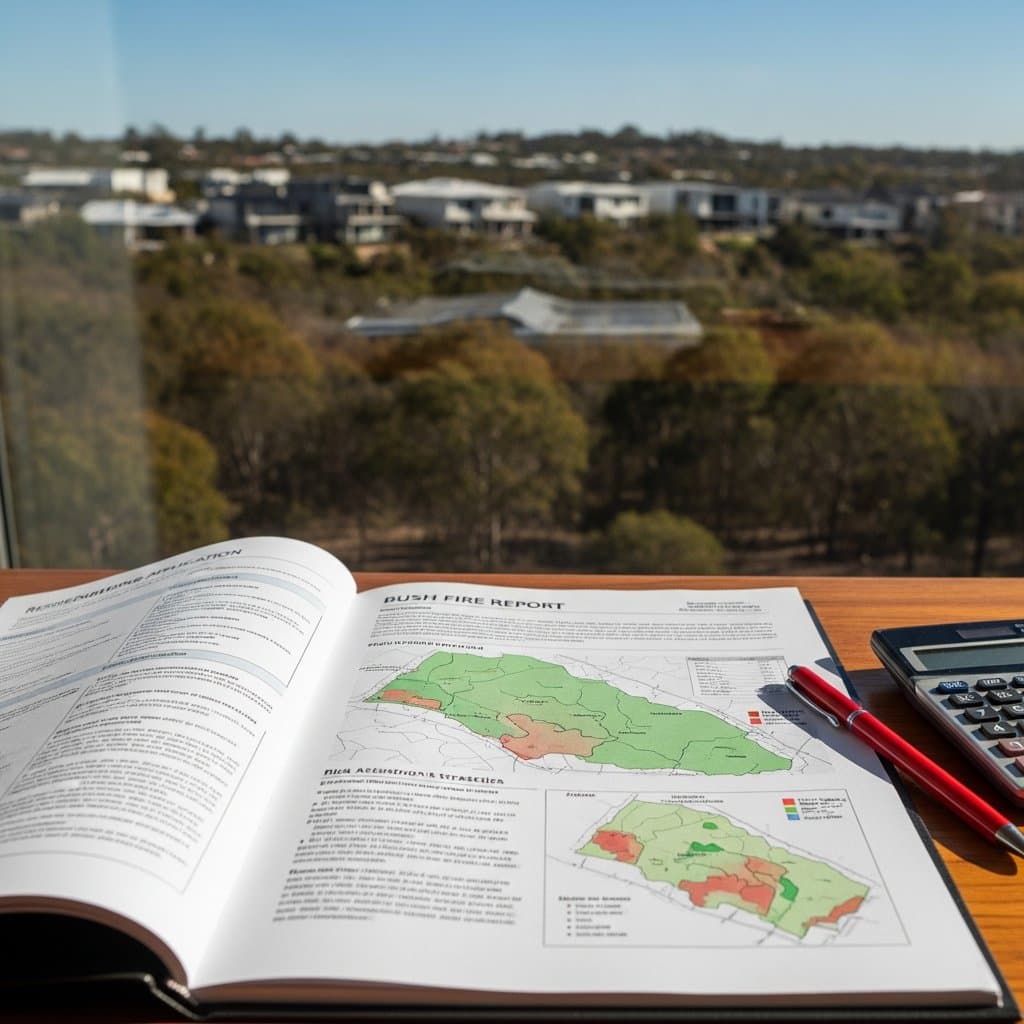
Document - Bushfire Assessment Report – Designing to comply while improving survival outcomes
What is a Bushfire Assessment Report?
You might think that because you live in a suburb and not the middle of the bush, you don't need to worry about bushfires. However, in NSW, "Bushfire Prone Land" covers a surprising amount of territory—including many areas with standard residential streets.
If your property is tagged on the map, you cannot build without a Bushfire Assessment Report. This document dictates exactly what materials you must use to protect your home from ember attack and radiant heat.
Here is a guide to understanding BAL ratings and how they impact your build cost.
What is a Bushfire Assessment Report?
A Bushfire Assessment Report is a document prepared by a qualified Bushfire Consultant (BPAD Accredited).
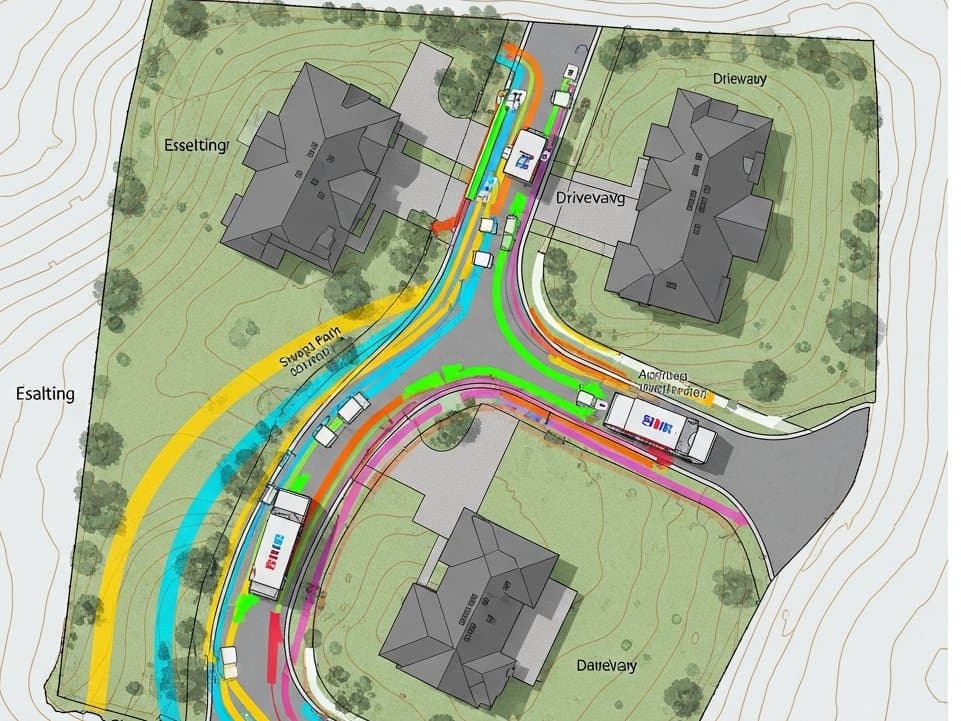
It analyzes the vegetation around your property, the slope of the land (fire travels faster uphill), and the distance between your home and the hazard. Based on this, it assigns your property a BAL (Bushfire Attack Level) rating.
Why do you need it for a DA/CC or CDC?
This is a mandatory safety requirement under the Rural Fires Act 1997.
Planning Approval: If your land is mapped as bushfire-prone, your DA or CDC cannot be approved without this report.
Construction Standards: The report tells the builder which Australian Standard (AS 3959) construction level they must follow.
Safety: It ensures your home is designed to give you and your family a better chance of survival (or property protection) during a fire event.
What is a "BAL Rating"?
The most critical output of the report is your BAL Rating. The higher the rating, the more expensive your build becomes.
BAL-LOW: Very low risk. No special construction requirements.
BAL-12.5: Low risk (ember attack). Requires mesh screens on windows and non-combustible timber near the ground.
BAL-19: Moderate risk. Requires specific toughened glass and non-combustible cladding materials.
BAL-29: High risk. stricter window and door requirements.
BAL-40: Very high risk. Windows must have metal shutters or be highly specialized fire-rated systems.
BAL-FZ (Flame Zone): Extreme risk. Direct exposure to flames. Requires expensive fire-rated shutters, walls, and roofs.
When is it required?
You need this report before you finalize your design (at the DA stage).
Do not wait until the Construction Certificate. If you design a home with massive timber windows and then find out you are BAL-40, you will have to redesign the entire facade because standard timber windows are not allowed.
Common Pitfalls and Professional Advice
The "Flame Zone" (BAL-FZ) is the budget killer.
Architect’s Tip: Positioning Matters. Sometimes, moving the house just 2 or 3 meters further away from the bush can drop you from a BAL-FZ rating down to BAL-40. This simple move can save you tens of thousands of dollars in glazing and shutter costs. At OAK Architecture and Design, we work with the consultant early to find the "sweet spot" on the site that balances safety with budget.
How to obtain a Bushfire Report
You generally need a BPAD Accredited Practitioner.
How we help: We check the NSW Planning Portal maps for you at the very start of the project. If you are in a bushfire zone, we engage the consultant immediately. We then integrate their requirements into our architectural specification so the builder can price them accurately.
Build safely without burning your budget.
Building in a bushfire zone requires specialized knowledge. If you need a team that knows how to design beautiful, compliant homes in bushfire-prone areas, contact OAK Architecture and Design today.