Designing Social Spaces Part 2 - Dining room
Designing Social Spaces Part 2: Dining room
In an open-plan home, the Dining Room is the bridge between the high-energy Kitchen and the relaxed Living zone. It is where the family gathers to reconnect.
However, comfortable dining is about more than just the table size; it is about the "invisible" space around it. If guests are trapped in their chairs or servers have to squeeze past, the atmosphere is ruined. Here is the architectural logic for dimensioning your dining zone.
1. Dining Dimensions: The "Shared Access Zone"
Whether formal or casual, a dining table requires a "Shared Access Zone" to allow for serving and movement. When planning your floor area, you must account for the table plus the human movement around it.
Chair Clearance (The "Sit" Zone)
You need a minimum of 450mm–600mm behind a chair for a person to sit down and scoot in comfortably.
If you place a table 300mm from a wall or sideboard, that seat becomes unusable.
Walkway Clearance (The "Serve" Zone)
If people need to walk behind a seated person (e.g., to serve food or access the patio), you need at least 900mm–1000mm of clear space from the table edge to the wall.
The Trap: A common error is buying a table that fits the room when empty, but blocks the hallway once chairs are pulled out.
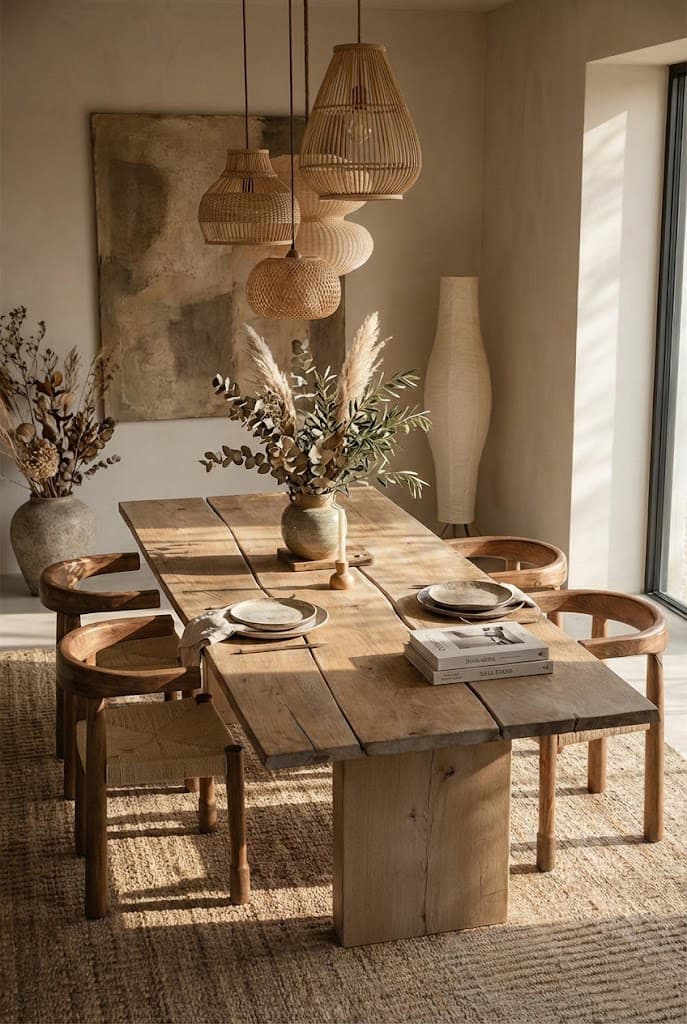
Table Shape: Square vs. Round The geometry of the room dictates the shape of the table.
Rectangular Tables: Best for long, narrow rooms or defining a clear boundary between kitchen and living.
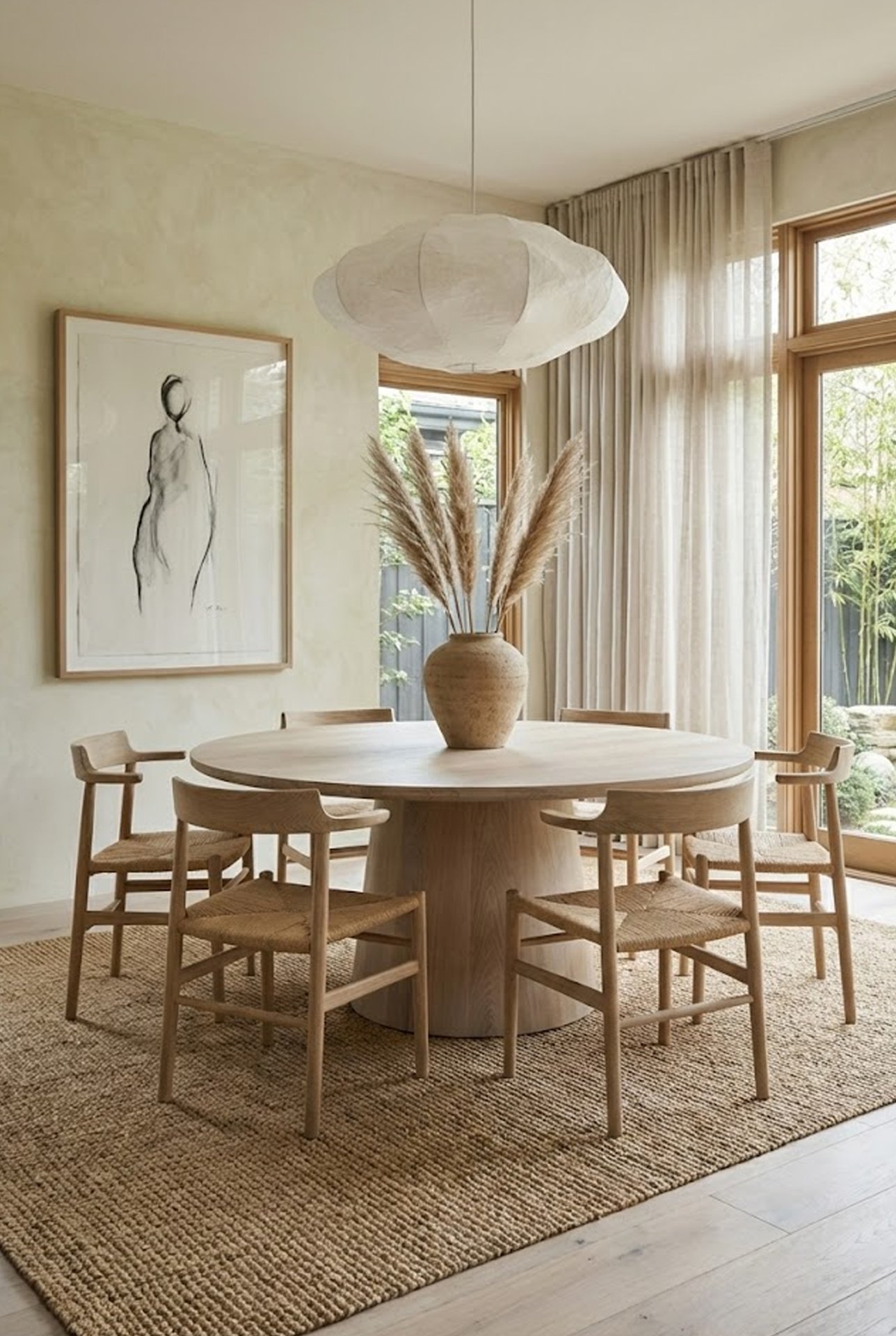
Round Tables: For smaller or square rooms, a round table is often best. It nurtures conversation for groups of four to six (everyone faces everyone) and eliminates sharp corners in tight thoroughfares.
3. Lighting: The Visual Anchor
In a large open room, the dining table can feel lost. Lighting is the tool we use to anchor it.
The Pendant: Installing a pendant light directly over the centre of the table signals "this is a destination."
The Height: The bottom of the light fixture should sit approximately 750mm – 850mm above the table surface. This is low enough to create intimacy and illuminate the food, but high enough that it doesn't block your view of the person sitting opposite.
Summary
The success of a dining room lies in the flow around the table. By prioritising the "Shared Access Zone" over the size of the table itself, you ensure the space feels generous and functional, even when fully occupied.