Bathroom - Part 2 - Designing Showers and Bathtubs
The Wet Zone: Designing Showers and Bathtubs
By OAK Architecture and Design
In a modern bathroom, the "Wet Zone" is the emotional center of the room. It is where you start and end your day. However, a visually stunning shower is useless if you hit your elbows every time you wash your hair, or if the freestanding bath is impossible to clean behind.
Designing this zone requires a balance of luxury aesthetics and rigid practical dimensions.
1. The Shower: Sizing for Comfort
Gone are the days of the cramped 900mm corner cubicle. Modern Australian design favours the "Walk-In" or large format shower.
The Golden Dimensions:
Minimum Comfortable Size: While 900mm x 900mm is the code minimum, it feels tight for an adult.
The "Elbow Room" Standard: We recommend a minimum width of 1000mm to 1200mm. This allows you to wash your hair without your elbows banging against the glass.
Length: For a walk-in shower (no door), you generally need a length of at least 1500mm to prevent water splashing out onto the main bathroom floor.
The "Wet Room" Concept (Stepless): A true luxury shower has no hob (curb) to step over. The floor tiles slope gently into a strip drain.
The Benefit: It makes the room feel larger because the floor surface is continuous. It is also future-proof for accessibility (no tripping hazards).
The Design Detail: This requires the floor to be recessed during the framing stage. It is much harder to retrofit into an existing home than a new build.
2. The Bathtub: Freestanding vs. Inset
The bathtub is often a source of debate: Is it a sculptural centerpiece or a practical tool for washing kids?
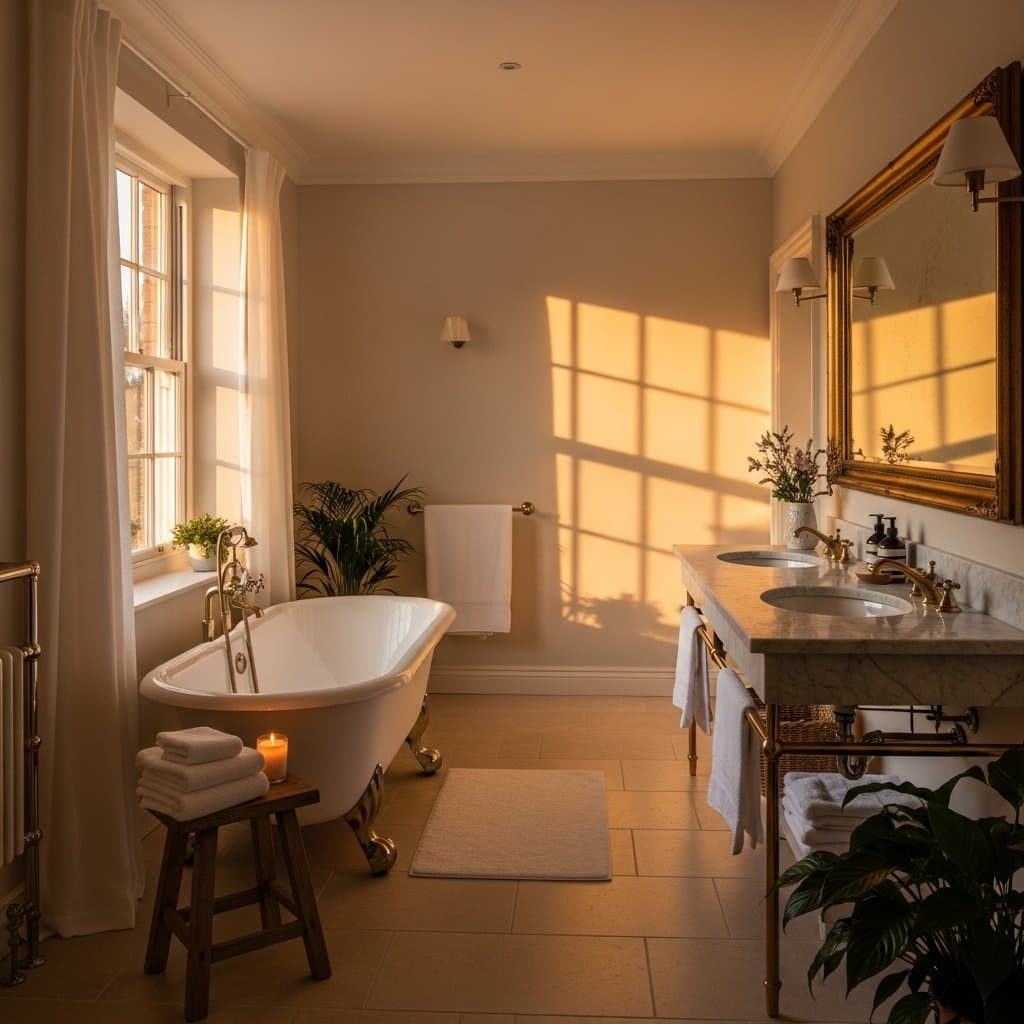
The Freestanding Bath
The Look: A statement piece that signals luxury. It makes a small bathroom feel bigger because you can see the floor tiles continue underneath it.
The Cleaning Trap: A common mistake is squeezing a freestanding bath into a space that is too small. You need a gap of at least 100mm–150mm around the entire tub to get a mop or your hand in to clean. If you place it 20mm from the wall, that gap becomes a "dust and mould trap" that you can never clean.
Storage: Freestanding baths have no ledge for shampoo or wine glasses. You must include a niche in the wall or a small stool next to the bath.
The Inset (Built-In) Bath
The Look: The bath is encased in a tiled "hob."
The Pros: It is far easier to clean (no gaps). The tiled ledge provides ample space for soap, toys, and candles. It is generally the safer, more practical choice for families with young children.
3. Shower Fixtures and Niches
The placement of the shower valve (mixer) is one of the most common onsite errors.
The "Dry Reach" Rule: You should be able to turn the shower on without getting wet. Do not place the mixer directly under the showerhead. Place it at the entry of the shower so you can warm the water up before stepping in.
The Niche: A recessed shelf is essential for storage. Ideally, this should be long and horizontal (e.g., 1200mm x 300mm) and placed on a wall that is not the main visual feature.
Height: The niche should be roughly 1200mm off the floor—accessible for adults but out of the direct splash zone.
Summary
The Wet Zone is the most expensive part of your bathroom to build, so get the geometry right. A 100mm gap around a bath or a perfectly placed shower mixer costs nothing in the design phase but makes a lifetime of difference in daily use.